




Multi-level Assessment of Cancer Risk Factors Preventive Legislation
The regulatory landscape in cancer primary prevention varies across risk factor domains. The country has adopted a zero-tolerance drink driving policy and comprehensive smoke-free legislation, while tobacco consumption remains high, HPV vaccination was introduced in 2023, and the physical activity policy framework is still in transition. Among the 4P-CAN consortium countries, Romania records some of the highest cancer risk factor exposure levels alongside a policy response that has expanded in recent years.
Adult smoking prevalence stands at 30.2% and a youth prevalence of 31.0% (2020), placing it among the higher-consuming countries in the consortium. Despite this, the country ranks 8th out of 37 European countries on the Tobacco Control Scale (2021), reflecting relatively strong policy implementation. Smoke-free legislation is comprehensive with moderate-to-high compliance (score 8 out of 10), and a toll-free cessation quit line is available. However, plain packaging has not been implemented, cigarette excise tax stands at 69.1% of the retail price, and cigarettes have not become less affordable since 2012 — indicating room for further price-based intervention.


The country operates one of Europe's strictest drink driving regimes, with a zero-tolerance blood alcohol concentration limit (0.0 g/L), alongside the Czech Republic, Hungary, and Slovakia. The minimum legal drinking age is 18. Still wine carries no excise duty (0 EUR per hectolitre), consistent with other wine-producing countries in the consortium, while ethyl alcohol is taxed at 930.64 EUR per hectolitre. A total of 221 alcohol policies were mapped across the consortium countries, covering taxation, age restrictions, advertising, and licensing.


The country is one of the two consortium countries — alongside Portugal — that has implemented a tax on sugar-sweetened beverages. The country falls under EU Regulation 1169/2011 on food information to consumers, which establishes mandatory nutrition labelling and allergen declaration requirements. National food and nutrition policies complement the EU-level regulatory framework, though the overall policy landscape in this domain remains less developed compared to tobacco and alcohol control.


The country is classified as an "EU type institutions (transitional)" country for physical activity policy, meaning it is in the process of building institutional coordination between the health, education, sport, and social sectors. National physical activity recommendations are adopted in line with WHO guidelines, but practical implementation remains limited. The country shares with Bulgaria a structural challenge common to former socialist states: physical activity promotion has historically been embedded in the sport sector rather than treated as a broader public health objective, creating a gap between policy intent and everyday accessibility.


Cervical cancer incidence is the highest (34.4 per 100,000) and mortality (18.3 per 100,000) rates among all 4P-CAN countries, reflecting decades of limited prevention infrastructure. HPV vaccination was introduced in 2023 for both girls and boys — the latest adoption in the consortium — and coverage remains very low at approximately 6%. By contrast, hepatitis B vaccination coverage stands at 93% under a recommended programme, though this falls short of the WHO 95% target. Targeted initiatives have been launched including the EU-funded "Rethink HPV Vaccination" project, the LIVERO-1 hepatitis B screening training programme, and a National Hepatitis Framework Plan (2019–2030) to address these gaps.


Socio-economic and informational determinants of cancer prevention
The country records the highest working-age cancer mortality rate in the consortium. Rapid productivity growth over the study period has increased the economic cost associated with each premature death. The country allocates a relatively low share of GDP to healthcare and a lower share to preventive care. This section presents the indirect and direct costs of cancer in Romania.
The country records the highest cancer mortality rate among the economically active population (ages 20–64) in the study, averaging 152 deaths per 100,000. The total annual economic loss averages EUR 564 million, comprising EUR 466 million in lost productivity and EUR 98 million in foregone tax revenue. Between 2015 and 2023, productivity losses surged from EUR 36 million to EUR 700 million — a trajectory driven by Romania's rapid wage and productivity growth (labour productivity CAGR of 9.2%, the fastest in the study). Mortality rates had been declining between 2015 and 2019 but reversed sharply from 2020, with COVID-19 disruptions to cancer screening and treatment contributing to the rebound. The cumulative nine-year economic burden is estimated at approximately EUR 5.1 billion.


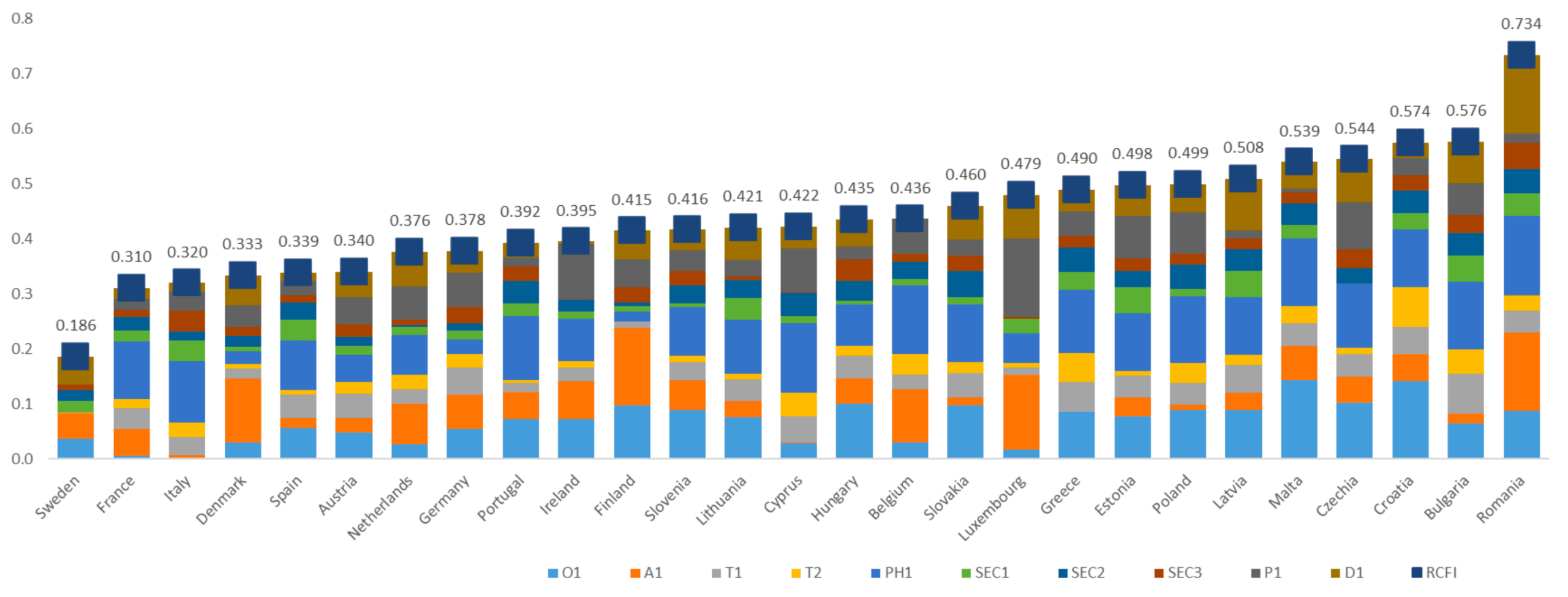
The country ranks among the highest-risk countries on the Cancer Risk Factors Index, a composite measure of obesity, tobacco and alcohol consumption, physical activity, socio-economic conditions, and pollution. Healthcare expenditure stands at approximately 5.7% of GDP, with out-of-pocket payments accounting for around 21% of total health spending. Preventive healthcare expenditure is particularly low at 27.8 PPS per inhabitant — among the lowest in the EU — and the data shows a negative correlation between preventive spending and cancer death rates across European countries. Under a comprehensive cancer control scenario combining prevention, screening, and treatment, the country could achieve estimated annual economic gains of EUR 203 million.
Cancer Risk Factor Index (CRFI) results
Relationship between Cancer Risk Factor Index (CRFI) and Cancer Mortality Rate
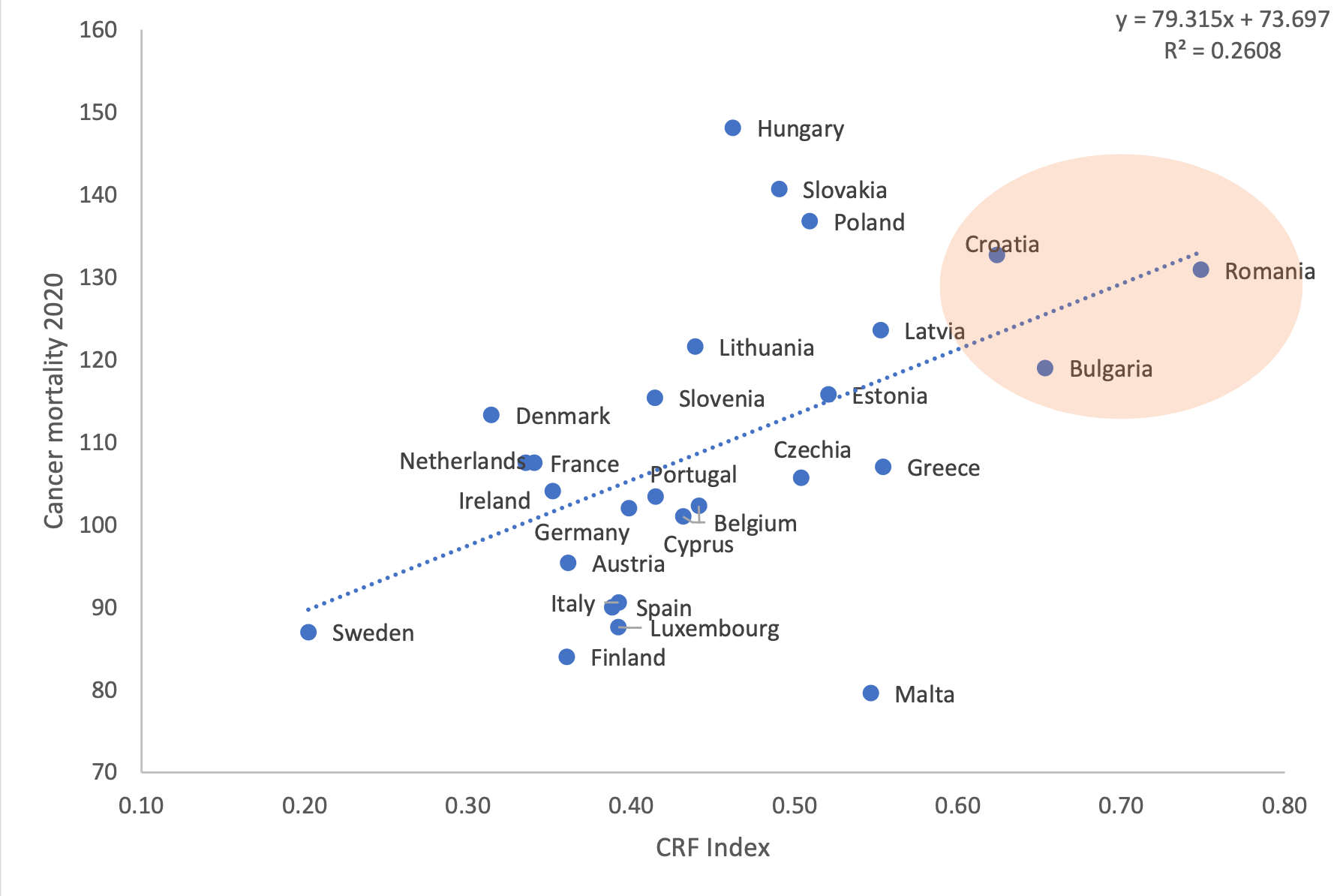
Cancer Risk Factor Index (CRFI) and Cancer Mortality Rate
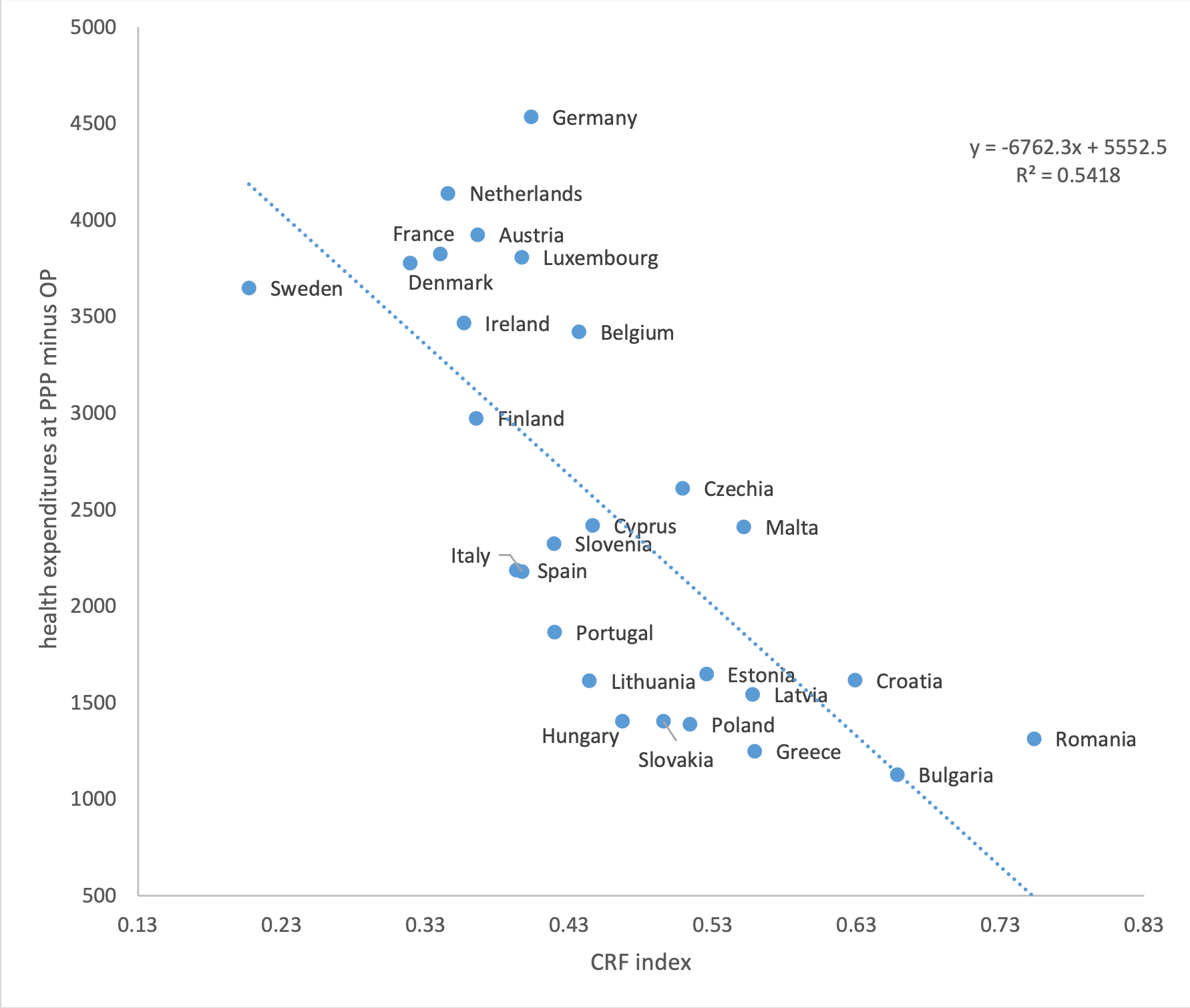
Cancer Prevention Literacy and Information on Cancer Primary Prevention
The data presented for the four EU and three non-EU countries are derived from commercial voluntary online panel surveys. The results are based on unweighted raw data and have not been calibrated to national census population benchmarks. They should not be interpreted as nationally representative prevalence estimates.
The survey questionnaires used in the EU and non-EU countries differ slightly. Consequently, results are not directly comparable between these groups of countries.
The survey questionnaires used in the EU and non-EU countries differ slightly. Consequently, results are not directly comparable between these groups of countries.