




Multi-level Assessment of Cancer Risk Factors Preventive Legislation
The Republic of Moldova operates outside the European regulatory framework as a non-EU member state, yet has achieved the highest smoke-free compliance score in the consortium and maintains a stricter-than-standard drink driving limit. Physical activity policy implementation and vaccination coverage remain limited. Moldova's regulatory profile reflects a pattern observed across the consortium's non-EU countries: formal adoption of international standards alongside gaps in implementation capacity and resources.
Adult smoking prevalence stands at 25.2% (2020), placing it at a moderate level within the consortium. As a non-EU country, the country is not ranked on the Tobacco Control Scale; however, its regulatory performance is notable. Smoke-free policies achieve a perfect score of 10 out of 10 — the best compliance level recorded across all consortium countries — with complete measures and high enforcement. Advertising bans are comprehensive (compliance score 9), and both vending machine and internet sales of tobacco products are banned. A toll-free cessation quit line is available. Plain packaging has not been implemented, consistent with all non-EU countries in the study. Cigarette excise tax stands at 65.4% of the retail price, at the lower end of the consortium range, and cigarette affordability has not changed since 2012.


A blood alcohol concentration limit of 0.3 g/L applies for drivers, stricter than the standard 0.5 g/L threshold used in most European countries. The minimum legal drinking age is 18. Still wine carries no excise duty (0 EUR per hectolitre), a pattern shared with other wine-producing countries in the consortium. Ethyl alcohol is taxed at 625 EUR per hectolitre, below the consortium average.


HPV vaccination was introduced in 2018 for girls and extended coverage to boys in 2021 — a relatively late adoption within the consortium, though notable for including both genders. HPV vaccination coverage for girls stands at 54% for the first dose and 44% for the last dose; coverage data for boys are not available. Hepatitis B vaccination coverage stands at 88% under a mandatory programme, adequate but below the WHO target of 95%. The country participates in the HEAT project for a comprehensive response to hepatitis B, C, and D. Cancer incidence increased from 163.2 to 173 per 100,000 population between 2012 and 2019, underscoring the need for sustained preventive intervention including vaccination.


Socio-economic and informational determinants of cancer prevention
The indirect cost data illustrate an amplification effect in which modest increases in mortality translate into larger economic losses due to rapid productivity and wage growth over the study period. As the second poorest country in Europe by GDP per capita, Moldova allocates a low share of national income to healthcare and operates with limited institutional capacity in cancer diagnosis and treatment. This section presents the indirect economic losses from cancer mortality alongside the structural characteristics of Moldova's healthcare system.
Cancer mortality among the economically active population declined from 130.99 per 100,000 in 2015 to 122.58 in 2018, before reversing sharply to reach 144 per 100,000 by 2022-2023 — a 20% increase over five years. Total annual economic losses more than doubled over the study period, rising from EUR 21.85 million in 2015 to EUR 42.60 million in 2023. This trajectory illustrates an amplification paradox: while mortality increased by 20% between 2019 and 2023, economic losses surged by 58%, driven by hourly productivity nearly doubling from EUR 4.49 to EUR 9.03. The country records the most severe decline in the economically active population among all consortium countries (CAGR of -2.1%), compounding the economic impact of each cancer death. The cumulative nine-year economic burden is estimated at EUR 264.23 million, and a comprehensive prevention scenario could yield annual savings of approximately EUR 5.5 million.


GDP per capita stands at USD 5,726 (2022), making it the second poorest country in Europe. Health spending stands at 3.8% of GDP (2019), well below the EU average of approximately 6%, with out-of-pocket payments accounting for 36% of total health expenditure and informal payments remaining widespread. Cancer mortality reaches 225.8 per 100,000 population (2022), with breast, colorectal, prostate, skin, and tracheal cancers accounting for 52.6% of cases and over 6,100 annual cancer deaths recorded. The country has a single specialised oncology centre — the Oncological Institute in Chisinau — and lacks access to targeted drugs, immunotherapy, and bone marrow transplantation. Late tumour detection occurs in approximately 50% of cases, and no functional Cancer National Registry exists. The National Cancer Control Program (2016-2025), budgeted at approximately 3.2 billion MDL, operates with a deficit exceeding 900 million MDL.
Cancer Risk Factor Index (CRFI) results
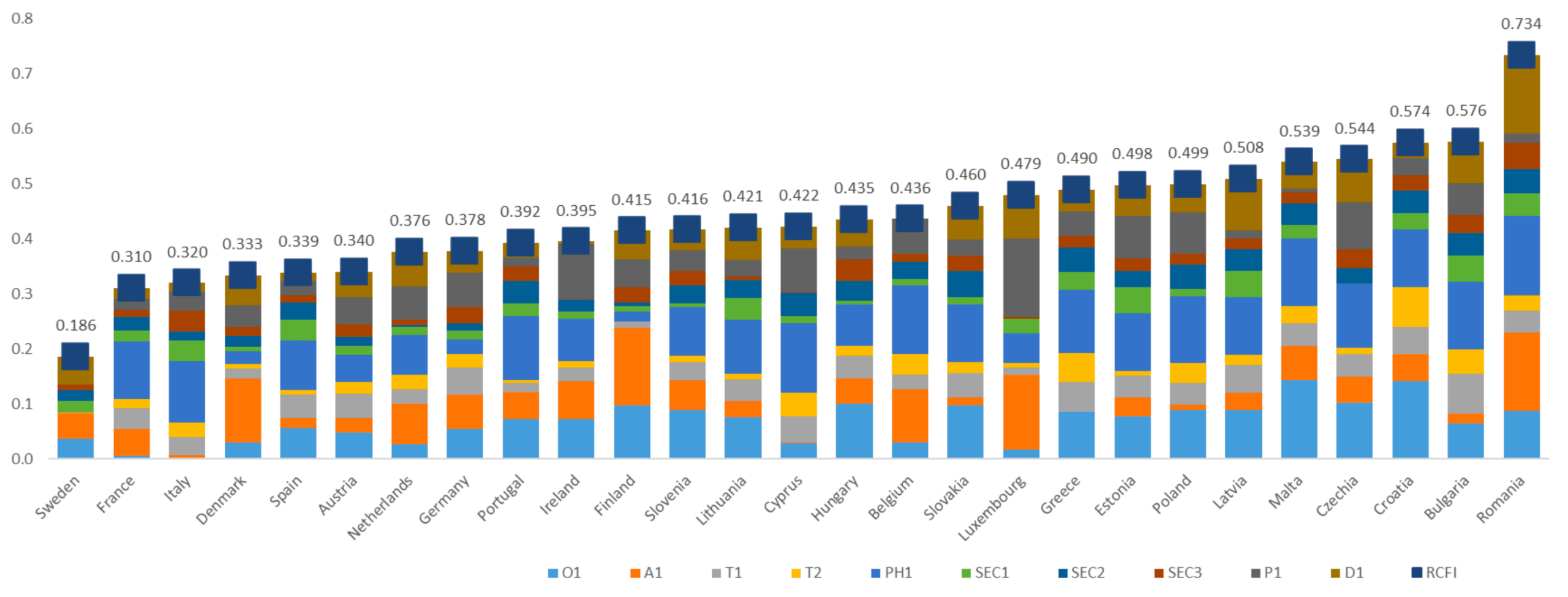
Relationship between Cancer Risk Factor Index (CRFI) and Cancer Mortality Rate
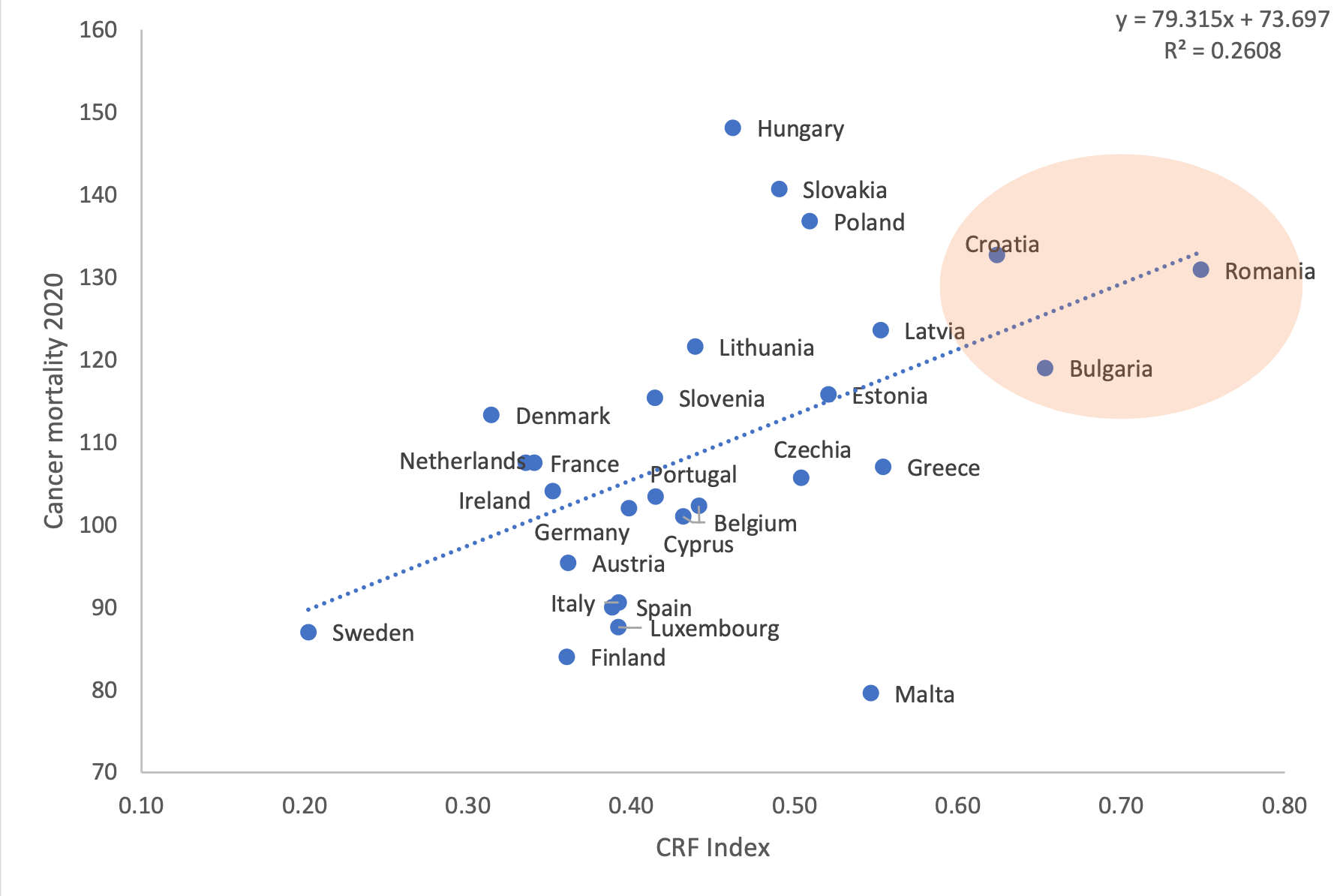
Cancer Risk Factor Index (CRFI) and Cancer Mortality Rate
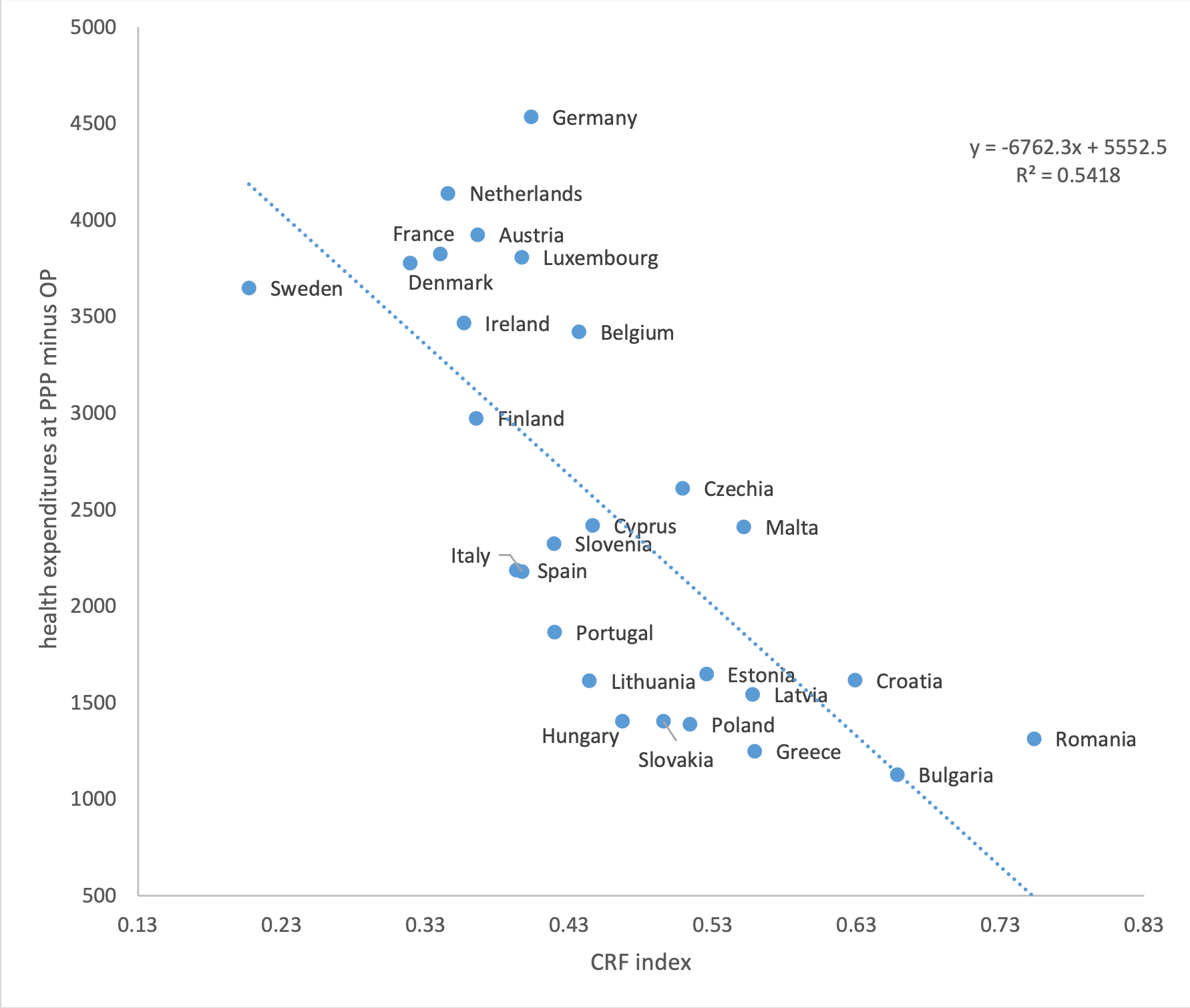
Cancer Prevention Literacy and Information on Cancer Primary Prevention
The data presented for the four EU and three non-EU countries are derived from commercial voluntary online panel surveys. The results are based on unweighted raw data and have not been calibrated to national census population benchmarks. They should not be interpreted as nationally representative prevalence estimates.
The survey questionnaires used in the EU and non-EU countries differ slightly. Consequently, results are not directly comparable between these groups of countries.
The survey questionnaires used in the EU and non-EU countries differ slightly. Consequently, results are not directly comparable between these groups of countries.