




Multi-level Assessment of Cancer Risk Factors Preventive Legislation
The country records the lowest tobacco prevalence among consortium members, the only HPV vaccination coverage rate for girls meeting the WHO 90% target, and is one of two countries to have implemented a sugar-sweetened beverage tax. At the same time, the Tobacco Control Scale ranking is low relative to its prevalence figures (30th of 37), and rising physical inactivity prompted the creation of a dedicated inter-ministerial coordination mechanism. This section presents the regulatory and epidemiological data for each risk factor domain.
Adult smoking prevalence stands at 17.0% and a youth prevalence of 14.0% (2020), both the lowest among the 4P-CAN consortium countries — tied with Ireland on adult prevalence. Despite these favourable figures, the country ranks only 30th out of 37 European countries on the Tobacco Control Scale (2021), indicating low-to-moderate policy implementation relative to peers. Plain packaging has not been introduced, and cigarettes have not become less affordable since 2012, suggesting that the low prevalence is not primarily driven by regulatory stringency. Recommendations focus on implementing plain packaging, expanding cessation programmes, and introducing measures to reduce tobacco affordability.


A standard blood alcohol concentration limit applies of 0.5 g/L, in line with the majority of EU member states. The minimum legal drinking age is 18. These measures sit within the broader EU regulatory framework for alcohol control, which encompasses taxation, advertising restrictions, age verification, and licensing. The alcohol policy landscape is broadly typical of Southern European countries, where wine production and cultural consumption patterns shape the regulatory approach.


The country is one of the two consortium countries — alongside Romania — that has implemented a tax on sugar-sweetened beverages. The country falls under EU Regulation 1169/2011 on food information to consumers, which establishes mandatory nutrition labelling and allergen declaration requirements. The SSB tax positions the country among a small but growing group of European countries using fiscal instruments to address dietary risk factors for cancer and other non-communicable diseases.


The country is classified as an "EU type institutions" country for physical activity policy, reflecting a more advanced institutional framework than some consortium peers. The country has established the Intersectoral Commission for the Promotion of Physical Activity, bringing together the health, education and sports, science and higher education, and work and social security sectors to ensure coordinated action on physical activity. This coordination mechanism was prompted by rapidly increasing physical inactivity, indicating that institutional capacity has been built in direct response to worsening population-level indicators. This approach demonstrates how rising inactivity can serve as a policy trigger for cross-sectoral governance reform.


The country is the standout performer in the consortium for vaccination coverage. HPV vaccination was introduced in 2008 for girls and extended to boys in 2020, making it an early adopter. Coverage reaches 90% for girls and 88% for boys — the only country in the consortium meeting the WHO 90% target for girls. Hepatitis B vaccination coverage stands at 99% under a recommended (voluntary) programme, the highest in the consortium and well above the WHO 95% target. This creates a notable paradox: the voluntary HBV programme outperforms mandatory programmes in several other consortium countries, suggesting that programme design, public trust, and healthcare system integration may matter more than legal obligation alone. The country also participates in the CBIG SCREEN project for cervical cancer screening.


Socio-economic and informational determinants of cancer prevention
Working-age cancer mortality rose over the study period, and total economic losses increased at a rate that outpaced the underlying mortality trend. The data illustrate an amplification effect in which rising productivity and wages increase the economic cost associated with each premature death. This section presents the indirect and direct costs of cancer in Portugal.
Cancer mortality among the economically active population increased from 112 per 100,000 in 2015 to 121 per 100,000 in 2022–2023, an increase of approximately 8% over the period. Total annual economic losses grew from EUR 273.8 million in 2015 to EUR 412.7 million in 2023, an increase of 50.7% — more than double the rate of the underlying mortality increase. This amplification is driven by hourly labour productivity growth of 40% over the period (from EUR 22.56 to EUR 31.58), meaning each premature death carries a progressively larger economic cost. The cumulative nine-year economic burden is estimated at EUR 2.87 billion. Under a comprehensive cancer control scenario, the country could achieve estimated annual economic gains of EUR 84 million.


As an EU member state, the country is included in the Cancer Risk Factors Index analysis, which aggregates obesity, tobacco and alcohol consumption, physical activity, socio-economic conditions, and pollution indicators. The country is positioned within the group of EU countries where higher healthcare expenditure correlates with lower cancer risk, consistent with the broader finding that sustained investment in health systems and preventive care is associated with better population-level cancer outcomes. This profile supports the economic case for continued and expanded prevention spending as a cost-effective strategy for reducing both the human and fiscal burden of cancer.
Cancer Risk Factor Index (CRFI) results
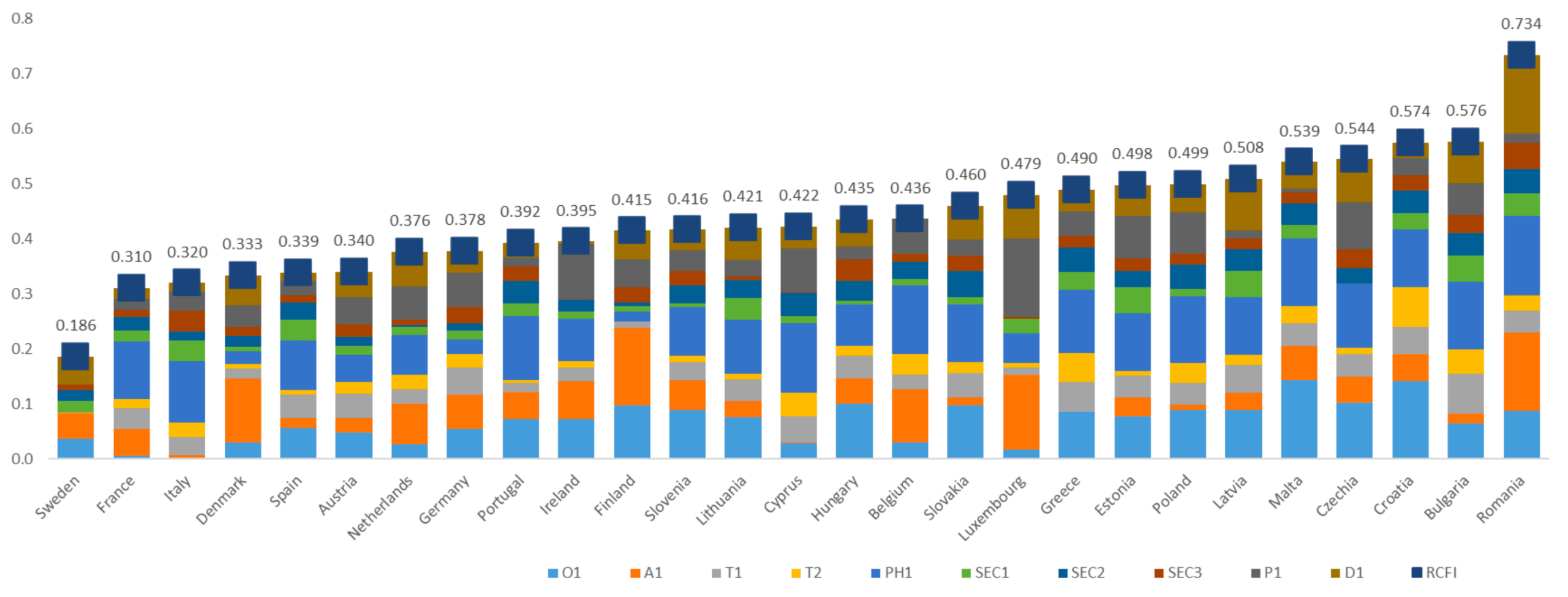
Relationship between Cancer Risk Factor Index (CRFI) and Cancer Mortality Rate
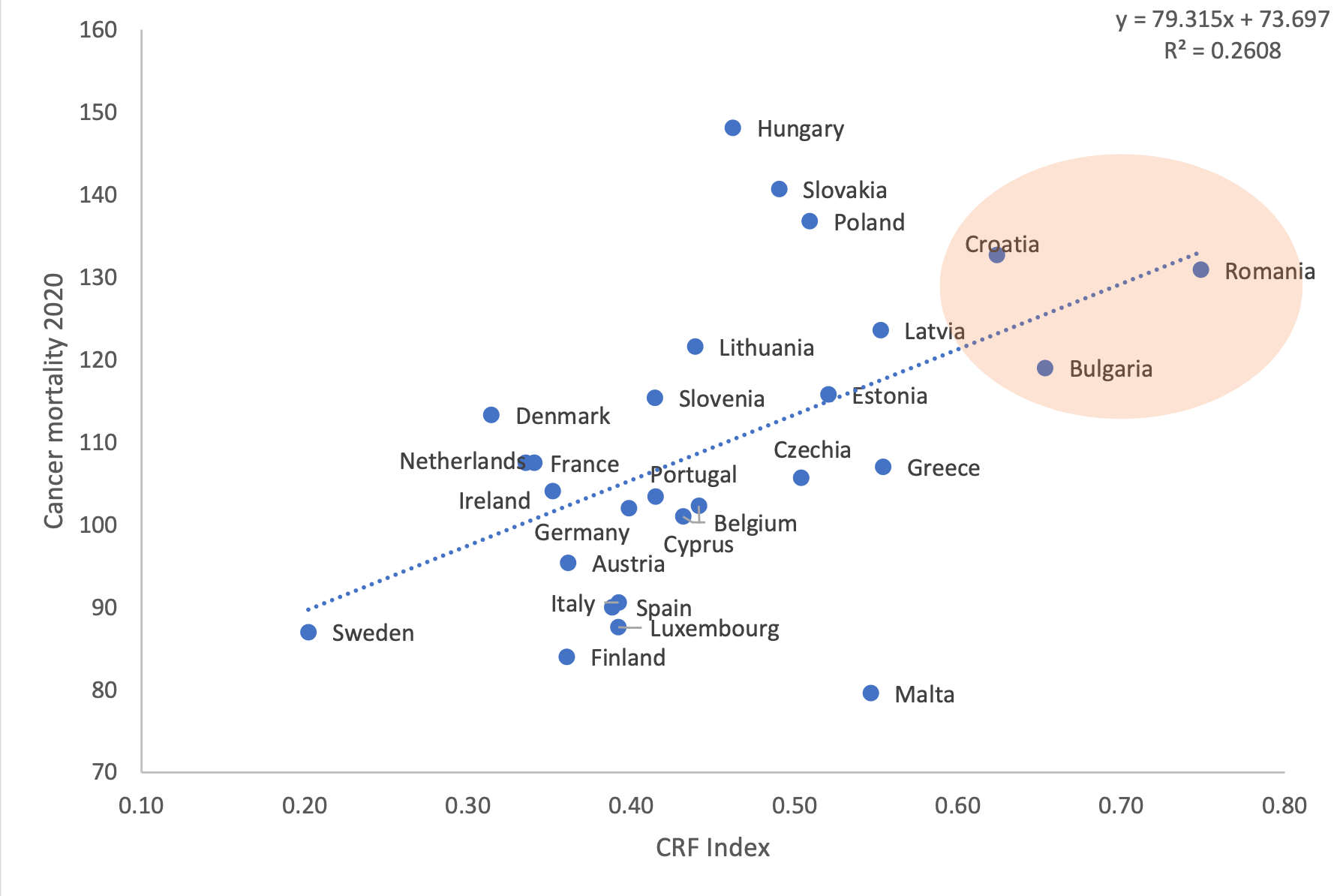
Cancer Risk Factor Index (CRFI) and Cancer Mortality Rate
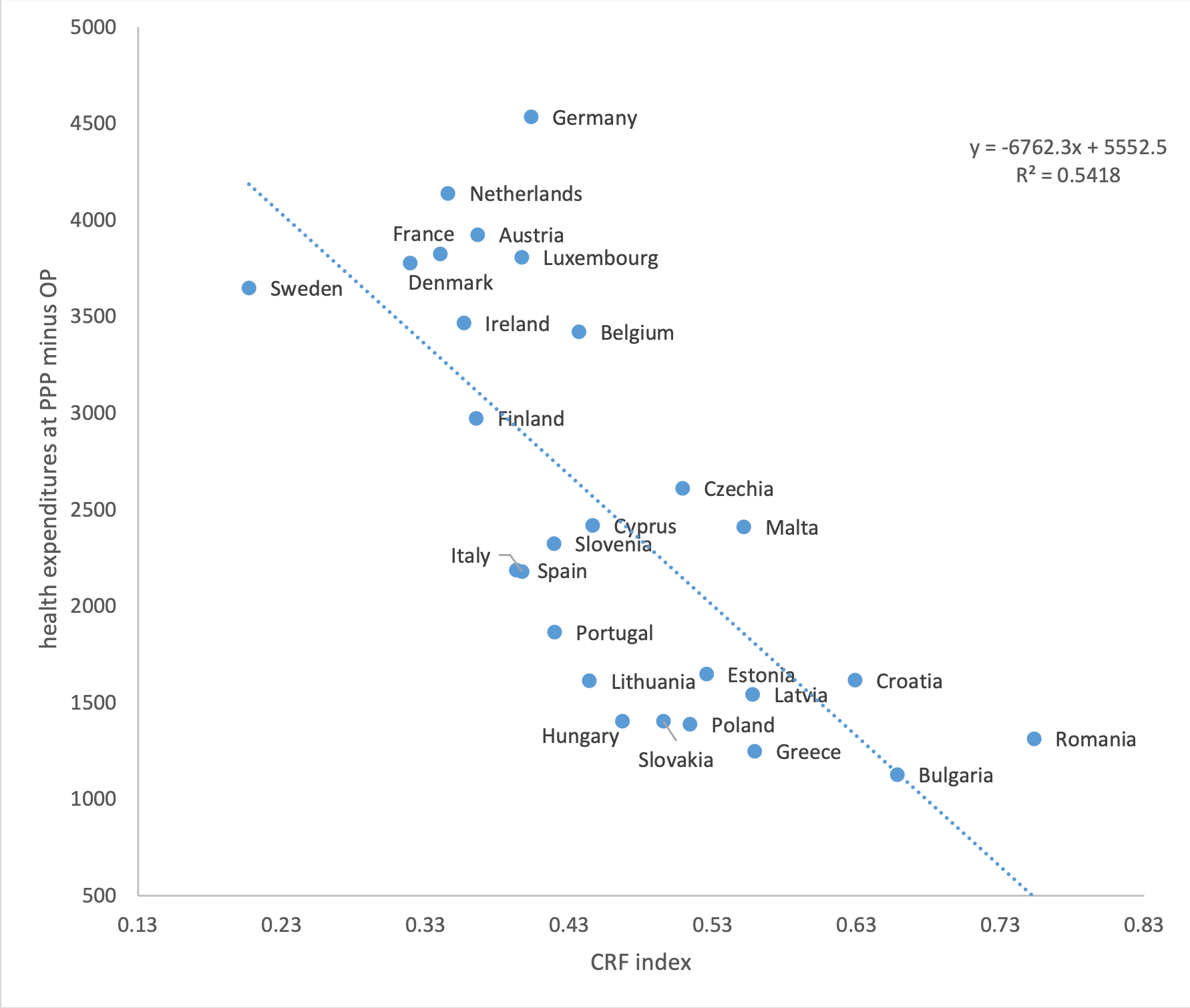
Cancer Prevention Literacy and Information on Cancer Primary Prevention
The data presented for the four EU and three non-EU countries are derived from commercial voluntary online panel surveys. The results are based on unweighted raw data and have not been calibrated to national census population benchmarks. They should not be interpreted as nationally representative prevalence estimates.
The survey questionnaires used in the EU and non-EU countries differ slightly. Consequently, results are not directly comparable between these groups of countries.
The survey questionnaires used in the EU and non-EU countries differ slightly. Consequently, results are not directly comparable between these groups of countries.