



Multi-level Assessment of Cancer Risk Factors Preventive Legislation
The prevention policy landscape varies across risk factor domains. The country was among the earliest in Europe to introduce HPV vaccination (2007/2008) and maintains high hepatitis B coverage through a mandatory programme. Tobacco control is moderate by European standards, with weak smoke-free enforcement and no plain packaging requirement, while alcohol taxation reflects the country's wine-producing profile. Among the 4P-CAN consortium countries, the country records relatively low cancer incidence for certain cancers alongside mid-range performance on several tobacco control indicators.
Adult smoking prevalence stands at 18.6% (2020), which is moderate and below the consortium average. Youth prevalence, however, stands at 32.0% — the highest in the consortium, tied with Bulgaria — indicating a substantial generational challenge. The country ranks 18th out of 37 European countries on the Tobacco Control Scale (2021), reflecting a mid-range policy position. Smoke-free policies are assessed as weak, and plain packaging has not been implemented. A toll-free cessation quit line is available, but cigarette affordability has not changed since 2012, limiting the deterrent effect of price. Vending machine sales remain legal, and internet sales are not banned. Key recommendations include implementing plain packaging, banning vending machine sales, and joining the Protocol to Eliminate Illicit Trade in Tobacco Products.


A standard blood alcohol concentration limit applies of 0.5 g/L for drivers, in line with the majority of EU member states. The minimum legal drinking age is 18. As a major wine-producing country, no excise duty is levied on still wine (0 EUR per hectolitre), consistent with other wine-producing nations in the consortium such as Romania and Bulgaria. This zero-rate taxation reflects longstanding cultural and economic considerations, though it limits the use of price-based mechanisms as a tool for reducing alcohol-related harm.


The country is classified as an "EU type institutions" country for physical activity policy, indicating a relatively mature institutional framework for cross-sector coordination. Eurobarometer data show that weekly physical activity participation has remained broadly stable — 40% in 2014, 42% in 2018, and 38% in 2022 — though the most recent figure represents a slight decline. National physical activity recommendations were adopted through the Ministry of Health and the Italian Regions in 2019. The "Gaining Health" programme (Guadagnare Salute), in place since 2007, and the National Prevention Plan 2020–2025, which includes an "Active Communities" programme, provide the country's strategic framework for physical activity promotion.


The country was an early adopter of HPV vaccination, introducing the programme for girls in 2007/2008 and extending it to boys in 2018. Despite early introduction, HPV vaccination coverage remains low, with a significant drop-off between first and last doses indicating challenges in programme completion. Cervical cancer incidence stands at 8.0 per 100,000 — among the lowest in the consortium — suggesting that other preventive factors, including established screening programmes, contribute to favourable outcomes. Hepatitis B vaccination is mandatory, with coverage at 95%, meeting the WHO 95% target. The mandatory nature of the HBV programme has been instrumental in maintaining consistently high coverage rates.


Socio-economic and informational determinants of cancer prevention
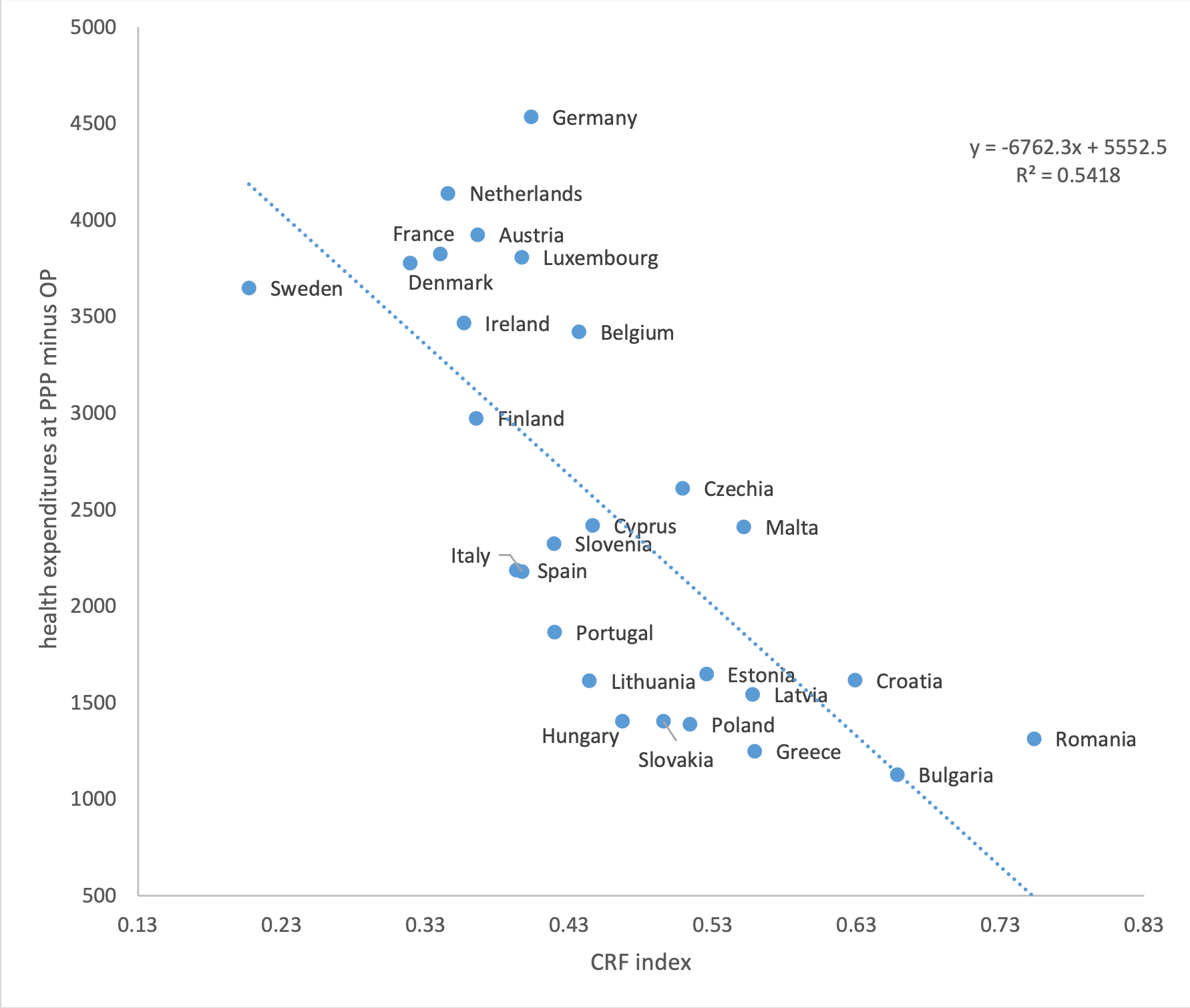
As an established EU member state with a mature healthcare system and relatively higher health expenditure. Comprehensive indirect cost data are not available for Italy within the consortium analysis. The direct cost indicators position the country at the higher-spending, lower-risk end of the European spectrum. This section presents the available economic evidence on cancer costs in Italy.


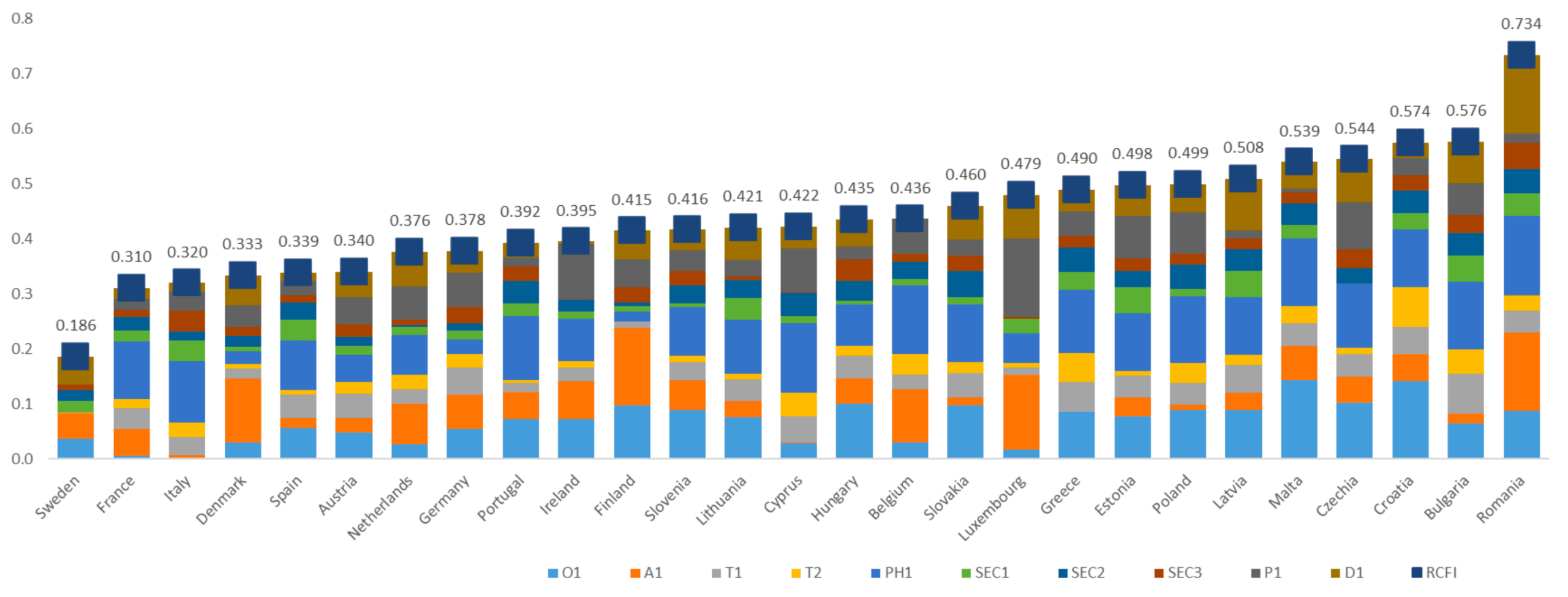
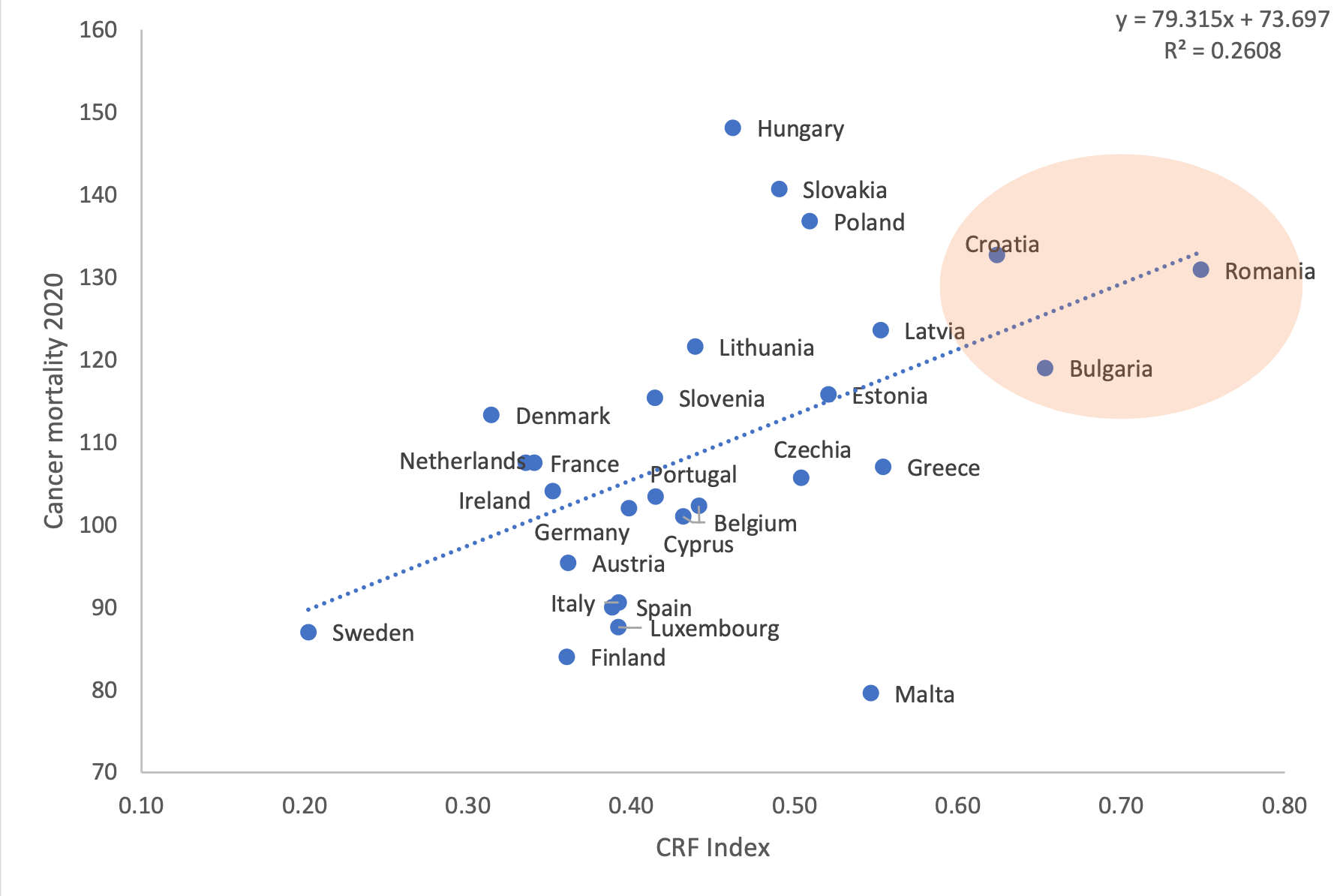
The country ranks as a low-to-moderate risk country on the Cancer Risk Factors Index, a composite measure encompassing obesity, tobacco and alcohol consumption, physical activity, socio-economic conditions, and pollution. As an EU member state with an established and universally accessible healthcare system, the country is positioned at the higher-spending, lower-risk end of the European spectrum. The cross-country analysis shows a correlation between health expenditure levels and cancer outcomes, with countries that invest more in healthcare — and particularly in preventive care — tending to record lower cancer mortality rates. This position underscores the value of sustained investment in both treatment infrastructure and upstream prevention.
Cancer Risk Factor Index (CRFI) results
Relationship between Cancer Risk Factor Index (CRFI) and Cancer Mortality Rate
Cancer Risk Factor Index (CRFI) and Cancer Mortality Rate
Cancer Prevention Literacy and Information on Cancer Primary Prevention
The data presented for the four EU and three non-EU countries are derived from commercial voluntary online panel surveys. The results are based on unweighted raw data and have not been calibrated to national census population benchmarks. They should not be interpreted as nationally representative prevalence estimates.
The survey questionnaires used in the EU and non-EU countries differ slightly. Consequently, results are not directly comparable between these groups of countries.
The survey questionnaires used in the EU and non-EU countries differ slightly. Consequently, results are not directly comparable between these groups of countries.