




The 4P-CAN Data Platform, developed by the partners of the EU-funded 4P-CAN Project, gathers different sources and evidence-based documents related to policy, economic and behavioural science on cancer primary prevention across seven European countries, both within and outside the European Union.
Stakeholder benefits
The content of the 4P-CAN Data Platform is beneficial to these identified stakeholders groups:
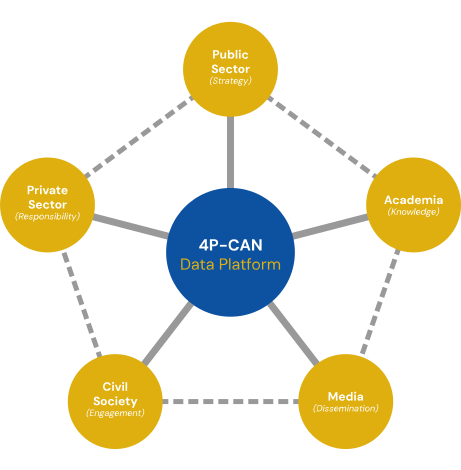

Public Sector
Access cross-country benchmarks and economic evidence to build the policy case for cancer prevention investment.

Academia & Research
Explore integrated, multi-source datasets and identify research gaps across seven countries in a single environment.

Media
Find credible, data-driven stories on cancer prevention with the context needed to report accurately and compellingly.

Civil Society
Ground advocacy in hard evidence — from community-level survey data to national policy gaps and economic burden figures.

Private Sector
Understand population health trends, regulatory landscapes, and the economic cost of inaction to inform responsible strategy.
Multi-Level Data Framework
The 4P-CAN Data Platform is built on a Multi-Level Data Framework designed to provide a comprehensive and interconnected understanding of cancer prevention ecosystems across Europe. By integrating data from different geographic and analytical scales, the framework enables users to explore how policies, systems, communities, and individual experiences interact to shape cancer prevention outcomes and behaviours.
This layered approach allows users to move seamlessly between broad European trends and local realities, supporting evidence-based analysis, comparison, and decision-making. The framework combines quantitative and qualitative information to provide both strategic insights and human-centred perspectives, highlighting not only statistical patterns but also the social and contextual dimensions behind them.
This layered approach allows users to move seamlessly between broad European trends and local realities, supporting evidence-based analysis, comparison, and decision-making. The framework combines quantitative and qualitative information to provide both strategic insights and human-centred perspectives, highlighting not only statistical patterns but also the social and contextual dimensions behind them.
META-LEVEL
Stakeholder Ecosystem Mapping
It provides the overarching European context surrounding cancer prevention. It focuses on policy environments, stakeholder ecosystems, and the relationships between key actors involved in prevention and health promotion. Through network analysis of penta-helix actors across the seven participating countries, this level illustrates how public authorities, healthcare organisations, academia, industry, civil society, and citizens interact to support collaborative and multisectoral approaches to cancer prevention.
MACRO-LEVEL
National aggregated data
It presents national-level data and indicators, enabling comparative analysis across the seven participating countries. By integrating internationally recognised sources, including Eurobarometer, Global Burden of Disease (GBD), EU Cancer Country Profiles, and WHO datasets, together with national data, this level provides a comprehensive overview of cancer prevention ecosystems. It offers insights into prevention policies, behavioural risk factors, health system characteristics, socioeconomic conditions, and public perceptions related to cancer prevention. Through cross-country benchmarking, the macro level supports the identification of shared challenges, emerging trends, and structural disparities across different national contexts.
MESO-LEVEL
Regional level
This level explores regional and demographic variation within countries. It highlights how cancer prevention awareness, literacy, and behavioural patterns may differ across territories and population groups. Through regional and subgroup analysis, this level helps uncover contextual differences that may not be visible in national averages alone, supporting a more nuanced understanding of local prevention challenges and opportunities.
MICRO-LEVEL
Human stories from Living Labs
It brings forward the human dimension behind the data by incorporating community-based insights and citizen experiences from the Living Labs. Drawing on qualitative narratives and local engagement activities, this level contextualises statistical findings through real-life perspectives and stories. It helps humanise the data, connecting broader trends with the lived realities of individuals and communities involved in cancer prevention initiatives.